
DarkHorse Wallet: A Key Part of the DarkHorse Ecosystem
After six months of development and refinement, it’s time to introduce DarkHorse Wallet!
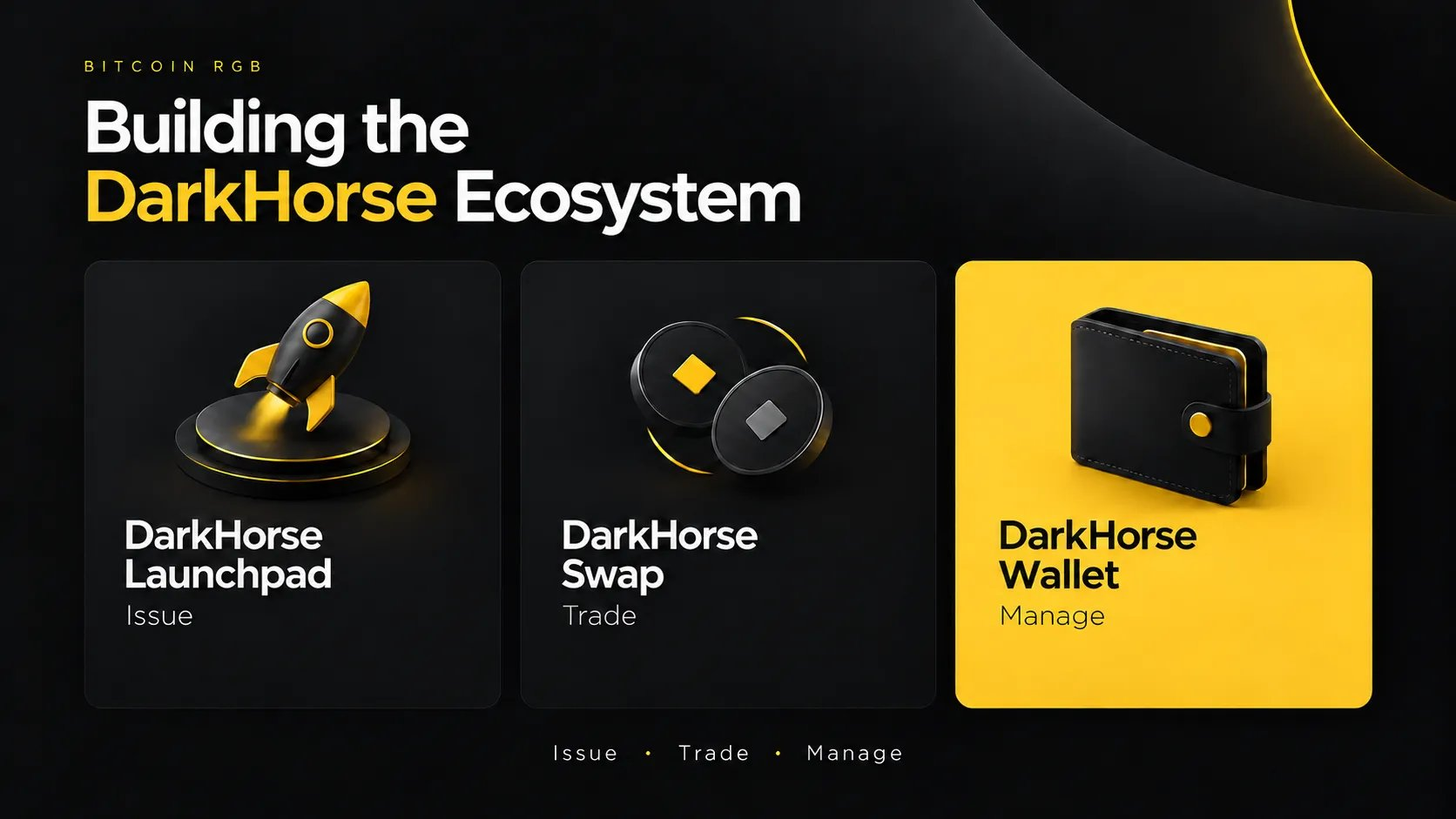
This native RGB wallet extends DarkHorse’s product offering beyond asset issuance and trading to asset transfers and everyday management.
From building a Pump fun on RGB to developing a native wallet, DarkHorse is building its own Bitcoin asset ecosystem.
Our long-term ambition is clear: to become the world’s most widely used Bitcoin wallet. We’re starting with RGB asset management and steadily improving the experience to give more Bitcoin users a reason to choose DarkHorse Wallet.
DarkHorse Wallet is currently in internal testing and has not been publicly released. This first development update explains why we’re building an RGB wallet and what we’ve achieved in our latest round of updates.
Why Are We Building an RGB Wallet?
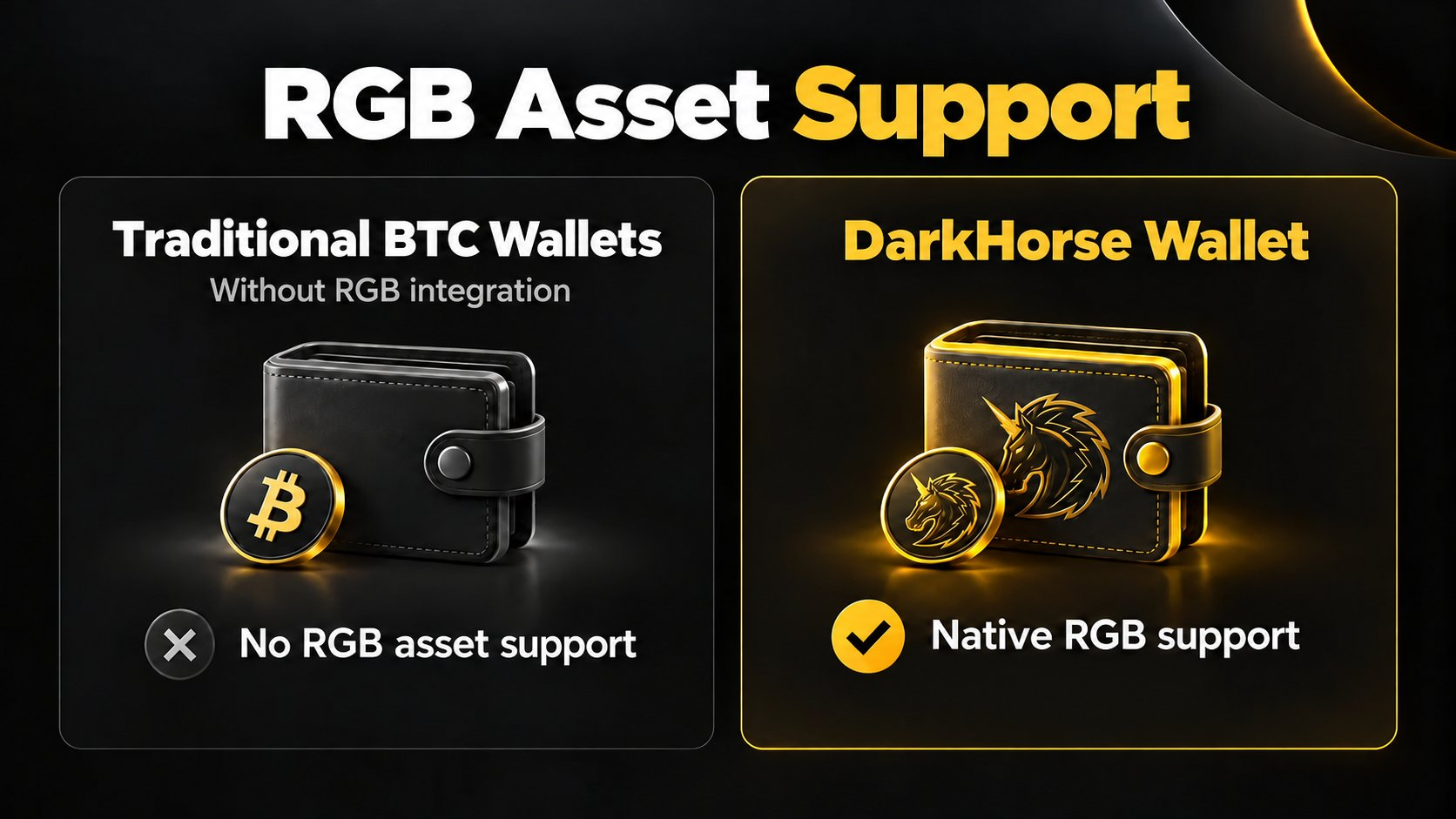
Many Bitcoin users already use wallets such as OKX and UniSat. But support for BTC transfers and signing does not automatically mean a wallet can manage RGB assets. RGB requires dedicated protocol integration to identify assets, validate proofs, and handle transfers.
The key is RGB’s client-side validation model.
Bitcoin records the relevant cryptographic commitments on-chain, while RGB asset data and state transition proofs are handled by the client. To confirm that a transfer is valid, the recipient must verify the relevant asset history, contract rules, and the correspondence between the proofs and the on-chain commitments.
An RGB wallet therefore needs to do more than manage BTC and sign transactions. It must also handle receiving and validating asset proofs, maintaining local asset state, and exchanging transfer data. A Bitcoin address and transaction-signing capability alone cannot provide complete RGB asset management.
We’re building DarkHorse Wallet to connect asset issuance and trading on DarkHorse with ongoing asset management. After issuing or buying assets on the platform, users will be able to receive, view, and send them through the wallet.
Development is led by our dedicated wallet team. We’re also working to integrate other RGB-compatible wallets, giving users more ways to access the platform.
Recent Development Progress
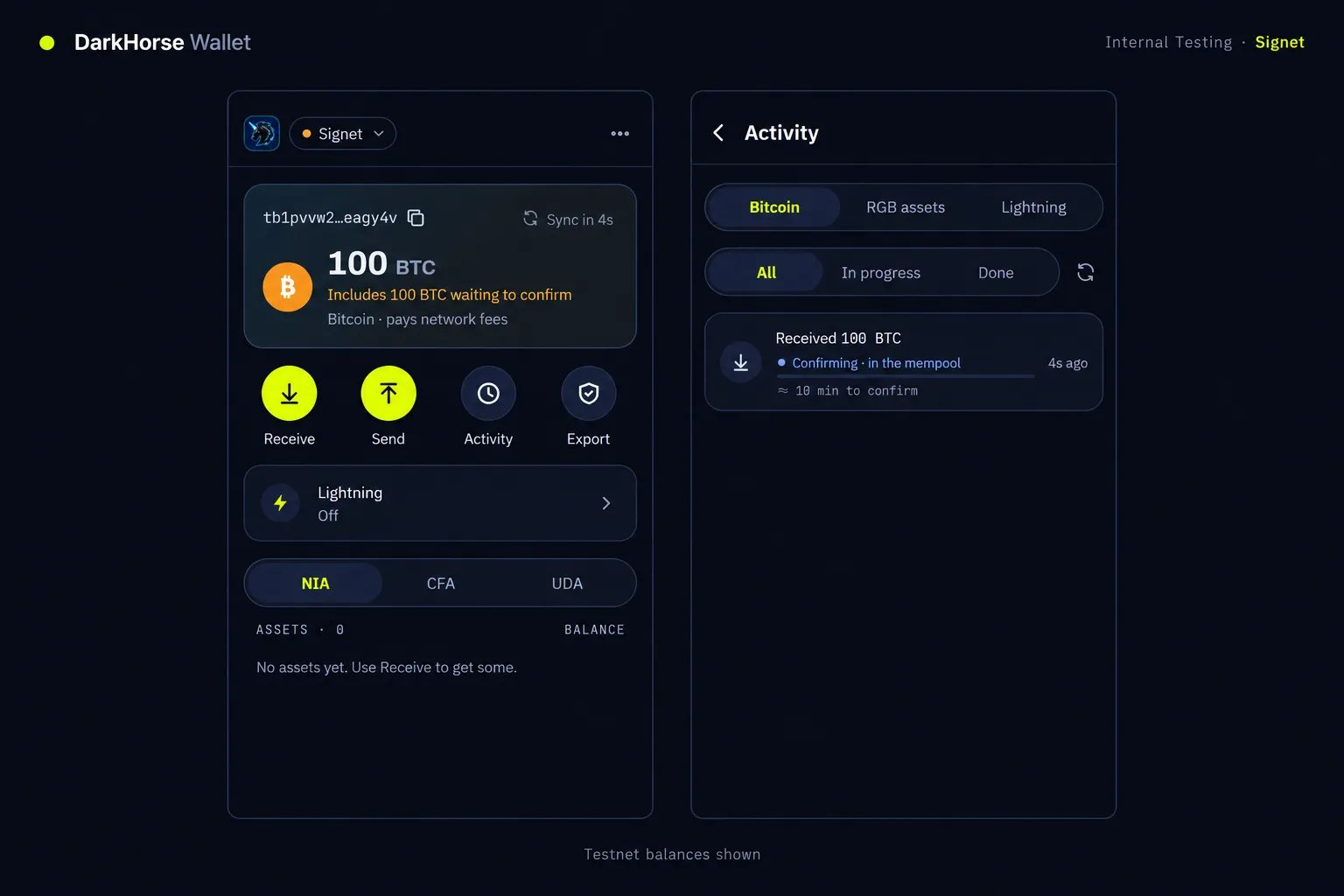
Over the past two weeks, the wallet team has focused on improving home screen loading and synchronization, while bringing Lightning Network functionality into internal testing on Signet.
Faster Loading for Assets and Transaction Status
When users open a wallet, they want to see their balances, assets, and transaction progress.
These datasets can take different amounts of time to load. If they wait on one another, a single slow query can delay the entire home screen.
RGB assets, BTC balances, and transaction history now load independently, so information appears as soon as it becomes available.
The home screen also displays previously cached balances and assets before fetching fresh data, reducing the initial wait. This display cache is cleared when the wallet is locked or the browser is closed.
We’ve also improved synchronization and query handling.
- Reduced redundant blockchain synchronization during refreshes.
- Enabled concurrent transaction confirmation status queries.
- Improved the efficiency of status updates across multiple transactions.
Lightning Network Functionality Enters Signet Testing
We’re integrating the Lightning Network into DarkHorse Wallet to prepare for future USDT deposits and withdrawals.
Lightning payments operate through payment channels. How much a user can send or receive depends on the channel’s available capacity and liquidity.
The wallet needs to present this information clearly so users can understand which actions are available.
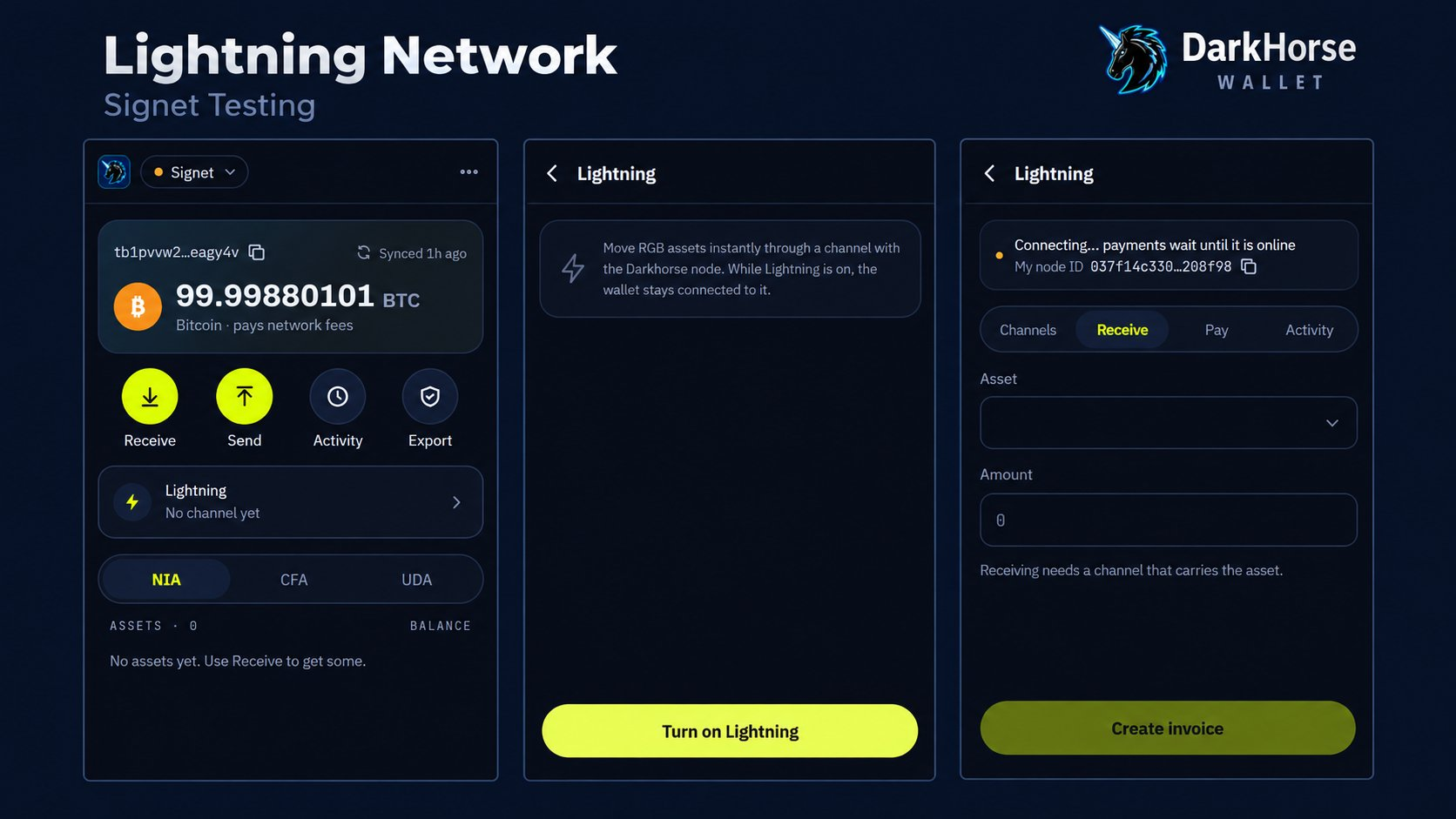
The latest internal testing build adds a Lightning Network page with the following features.
- View channels and balances to check channel status and available capacity.
- Generate payment invoices and QR codes to share payment requests.
- Preview payments by decoding and displaying invoice details before confirmation.
- Close channels and track the closing process and the return of funds to the on-chain wallet.
In the current internal testing setup, testers do not need to deploy or maintain their own Lightning nodes. Platform nodes handle channel opening and provide liquidity support.
We’ve also improved reconnection and connection error handling, and continue to test connection stability and payment flows.
Lightning functionality is currently being tested only on Signet and is disabled by default. Mainnet support is not yet available. USDT deposits and withdrawals are not yet available.
Current Status and How to Get Involved
DarkHorse Wallet remains in internal testing and has not been publicly released.
We’ll continue validating these updates. Testing opportunities and release announcements will be shared through our official channels.
Future development updates will cover further progress on both the wallet and the launchpad.
What features would you like to see in DarkHorse Wallet?